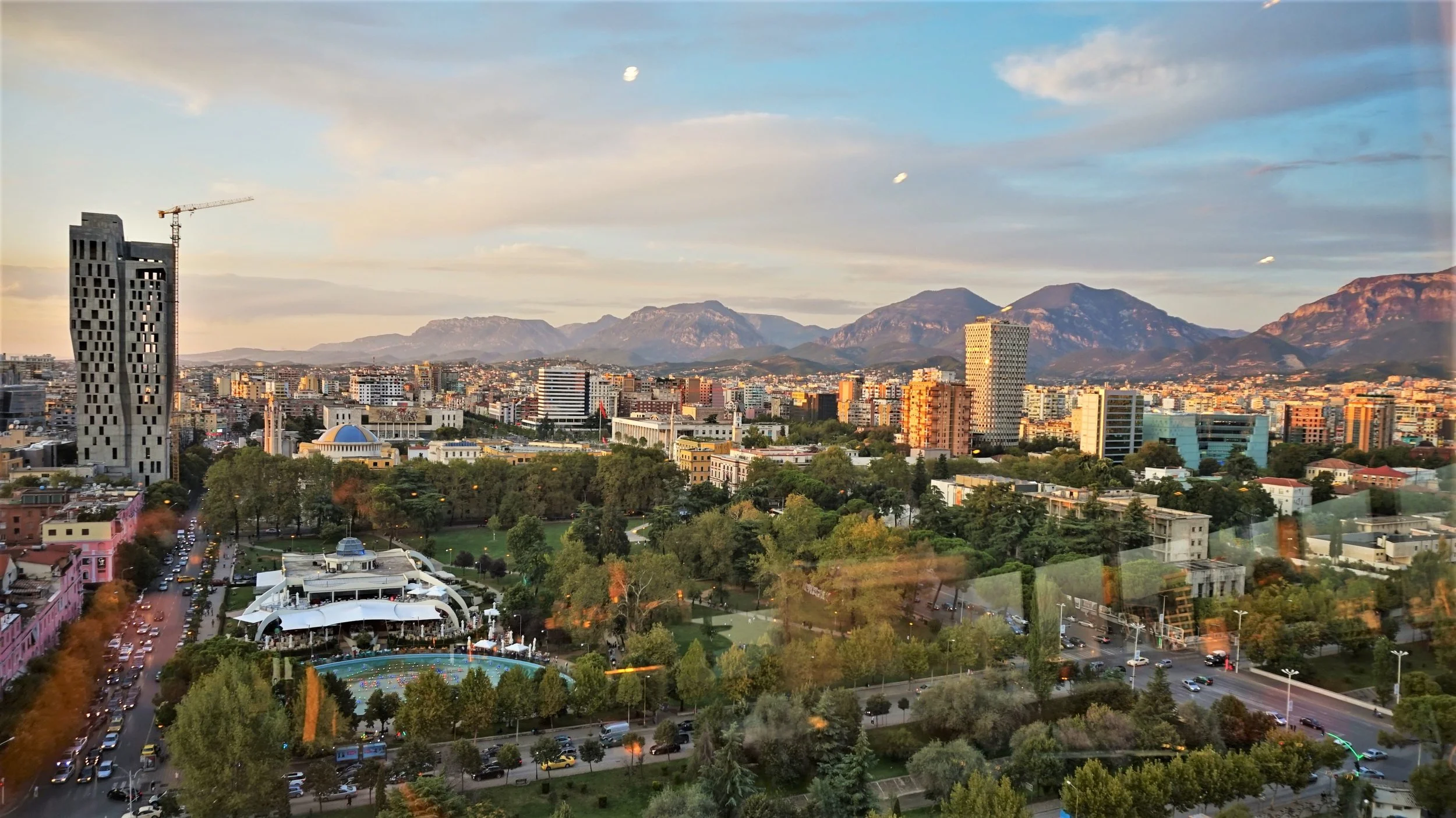
Tirana Travel Guide
Tirana is a vibrant, rapidly evolving capital city that masterfully blends its complex communist past with a colorful, modern energy. It is a city of striking contrasts, where Ottoman-era mosques sit alongside brutalist relics and trendy, mural-covered cafes.
About Tirana
Founded in the early 17th century by the Ottoman general Sulejman Pasha, Tirana began as a modest trading center before being declared the capital of Albania in 1920. The city underwent significant architectural transformation in the 1930s under King Zog I, who employed Italian architects to design the city's central layout, which remains a defining feature today. Following World War II, Tirana became the center of a long-lasting, isolationist communist regime under Enver Hoxha. This era left the city with a landscape of grey concrete, including thousands of defensive bunkers, but since the collapse of communism in 1990, the city has undergone a radical, colorful rebirth, transforming from a closed-off capital into a bustling, open-minded metropolis.
Tirana’s culture is defined by its legendary hospitality and a deep-seated 'coffee culture' that serves as the social heartbeat of the city. Locals spend hours in cafes, which act as the primary venues for business, socializing, and relaxation, reflecting a Mediterranean pace of life that persists despite the city's rapid modernization. The food scene is a delicious fusion of traditional Balkan, Ottoman, and Italian influences, with staples like _byrek_ (savory pastry) and _tavë kosi_ (baked lamb with yogurt) being essential experiences. The arts scene is equally dynamic, with the city’s grey communist-era buildings famously painted in bright, geometric patterns to symbolize a new, optimistic chapter for the nation.
Practical info
Quick facts
- During the communist era, the regime built over 170,000 concrete bunkers across Albania to protect against a perceived invasion that never came.
- Tirana is known for its 'colorful' urban renewal; in the early 2000s, the city's mayor ordered the painting of grey buildings in bright, vibrant colors to boost public morale.
- The city's central square, Skanderbeg Square, is designed as a shallow pyramid, with the highest point in the center reaching about 1.8 meters.
- Tirana is one of the few European capitals that does not have a McDonald's, as the local food culture remains fiercely loyal to traditional and independent eateries.
- The Dajti Ekspres cable car is the longest in the Balkans, whisking visitors from the city center to the top of Dajti Mountain in just 15 minutes.
Top things to do in Tirana
The 0 attractions, museums, viewpoints, and experiences travelers visit most.
Frequently asked questions
What currency is used in Tirana?
The currency in Tirana, Albania is Albanian Lek (ALL).
What language is spoken in Tirana?
Albanian is the primary language spoken in Tirana.
What's the weather like in Tirana?
Mediterranean climate with hot, dry summers and cool, wet winters.
How many days do you need in Tirana?
Most travelers spend 2–5 days in Tirana. With 0+ attractions and 0+ noteworthy restaurants, three days hits the highlights, while five lets you dig into neighborhoods and day trips. Use the Periplo iPhone app to lay out a day-by-day plan.
What are the must-see things to do in Tirana?
Top picks include Skanderbeg Square, Et'hem Bey Mosque, Bunk'Art 1, Dajti Ekspres Cable Car, The Pyramid of Tirana.
Plan Tirana in your pocket
Open the Periplo iPhone app for a day-by-day itinerary, offline maps, and live event picks tuned to your taste.
Download on the App Store