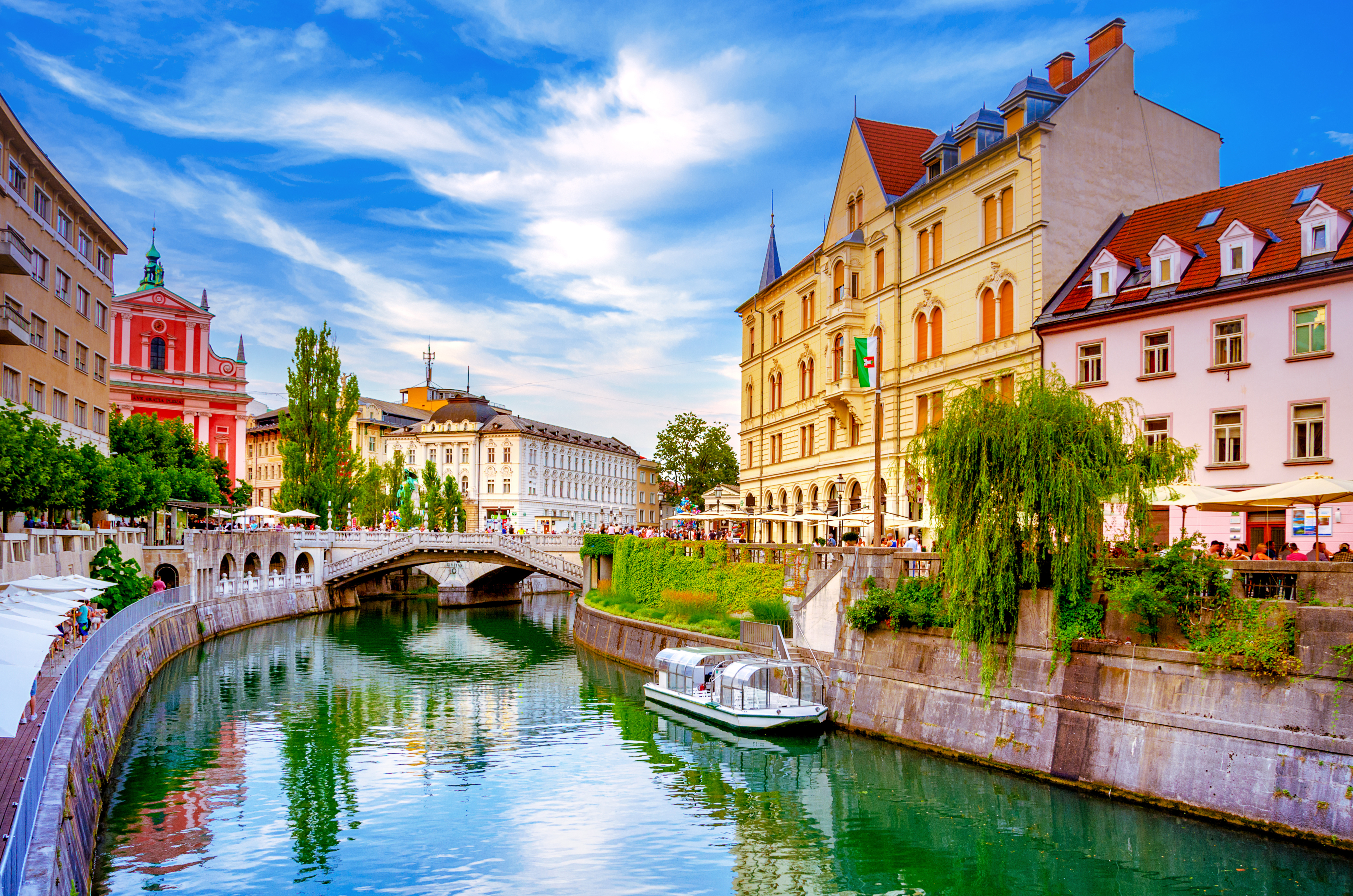
Ljubljana Travel Guide
Ljubljana is a charming, pedestrian-friendly capital that seamlessly blends Baroque and Art Nouveau architecture with a vibrant, youthful energy. Nestled along the willow-draped banks of the Ljubljanica River, it serves as the green, cultural heart of Slovenia.
About Ljubljana
The history of Ljubljana stretches back to the Roman era, when the settlement of Emona was established in the 1st century AD. Throughout the Middle Ages and into the 20th century, the city was a significant part of the Habsburg monarchy, serving as the historical capital of the Carniola region. Following the dissolution of the Austro-Hungarian Empire in 1918, Ljubljana became a key city within the Kingdom of Yugoslavia and later the capital of the Socialist Republic of Slovenia. Since Slovenia gained independence in 1991, the city has evolved into a modern, democratic European capital while meticulously preserving its rich architectural and cultural heritage.
Ljubljana is a city where life is lived outdoors, with locals frequently gathering at riverside cafes to enjoy the unhurried pace of life. The culture is deeply artistic, boasting over 10,000 events annually, ranging from the prestigious Ljubljana Festival to the eclectic, counter-cultural scene found in the former military barracks of Metelkova Mesto. The culinary scene is a delightful fusion of Italian, Germanic, and Eastern European influences, best experienced at the Central Market or the weekly 'Open Kitchen' (Odprta kuhna) food festival. The city is also a haven for literature and sustainability, famously hosting 'Library Under the Treetops' in its many public parks during the summer months.
Practical info
Quick facts
- The city is guarded by mythical dragons, which are featured on the city's coat of arms and immortalized in the famous statues on the Dragon Bridge.
- Ljubljana was named the European Green Capital in 2016, thanks to its extensive pedestrian zones and commitment to sustainability.
- The City Museum of Ljubljana houses the world's oldest wooden wheel, complete with a wooden axle, dating back over 5,000 years.
- Every Friday in the summer, the city hosts 'Odprta kuhna' (Open Kitchen), a massive outdoor food market where the city's best chefs serve gourmet dishes in the main square.
- The city's name is often associated with the Slavic word for 'beloved' (ljubljena), which perfectly captures the affection locals and visitors feel for the capital.
Top things to do in Ljubljana
The 0 attractions, museums, viewpoints, and experiences travelers visit most.
Frequently asked questions
What currency is used in Ljubljana?
The currency in Ljubljana, Slovenia is Euro (EUR).
What language is spoken in Ljubljana?
Slovenian is the primary language spoken in Ljubljana.
What's the weather like in Ljubljana?
Moderate continental climate with warm summers and cold, often snowy winters.
How many days do you need in Ljubljana?
Most travelers spend 2–5 days in Ljubljana. With 0+ attractions and 0+ noteworthy restaurants, three days hits the highlights, while five lets you dig into neighborhoods and day trips. Use the Periplo iPhone app to lay out a day-by-day plan.
What are the must-see things to do in Ljubljana?
Top picks include Ljubljana Castle, Dragon Bridge, Triple Bridge, Tivoli Park, Metelkova Mesto.
Plan Ljubljana in your pocket
Open the Periplo iPhone app for a day-by-day itinerary, offline maps, and live event picks tuned to your taste.
Download on the App Store