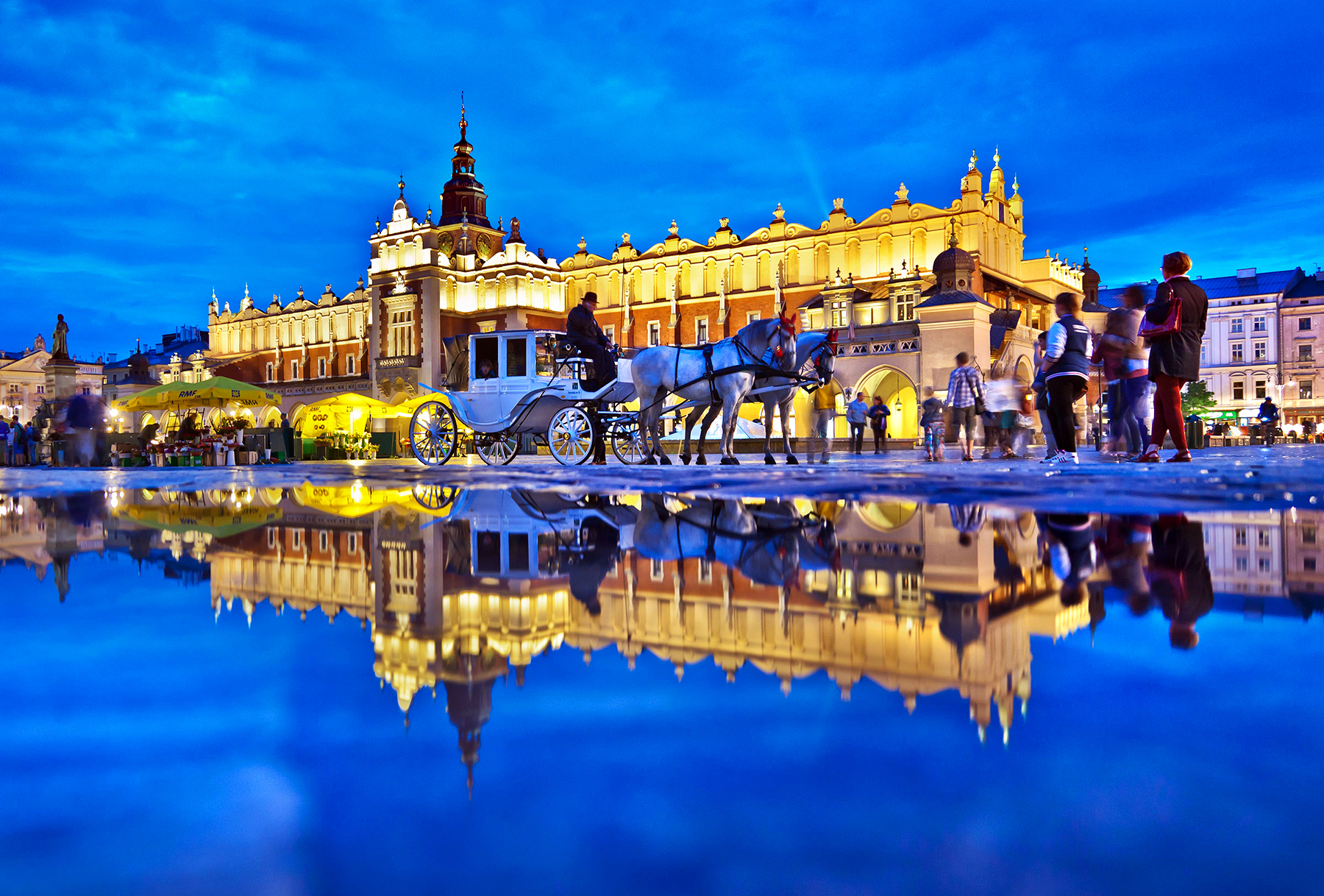
Kraków Travel Guide
Kraków is a captivating blend of medieval charm, royal history, and vibrant modern energy, serving as the cultural heart of Poland. As one of the few major Polish cities to emerge from World War II largely intact, its historic center remains a beautifully preserved treasure trove of Gothic, Renaissance, and Baroque architecture.
About Kraków
Founded according to legend by Prince Krakus after he defeated a dragon, Kraków has served as a pivotal center of Polish life since the 7th century. It officially became the capital of Poland in 1038 and remained the seat of Polish monarchs for over five centuries, fostering a golden age of art, science, and intellectual growth, notably marked by the founding of the Jagiellonian University in 1364. Although King Sigismund III Vasa moved the royal court to Warsaw in 1596, Kraków retained its status as the spiritual and cultural capital of the nation. Throughout centuries of partitions, occupations, and the devastation of the 20th century, the city stood as a resilient symbol of Polish identity, eventually being recognized as one of the world's first UNESCO World Heritage sites in 1978.
Kraków’s culture is deeply rooted in its academic heritage and artistic spirit, with a lively atmosphere fueled by its massive student population and historic cafes. The city is famous for its traditional Polish cuisine—think hearty pierogi, żurek (sour rye soup), and obwarzanek (a local ring-shaped bread)—as well as its profound Jewish heritage, particularly in the Kazimierz district, which hosts one of Europe's largest annual Jewish Culture Festivals. Art and performance are woven into the city's fabric, from the legendary Piwnica pod Baranami cabaret to the constant hum of street musicians in the Main Market Square. It is a city that honors its past through grand traditions while embracing a dynamic, modern lifestyle filled with galleries, jazz clubs, and literary events.
Practical info
Quick facts
- Kraków's Main Market Square is the largest medieval town square in Europe, measuring 200 by 200 meters.
- The city is home to the oldest continuously operating restaurant in Poland, Wierzynek, which has been serving guests since 1364.
- According to local legend, the city was founded on the site where Prince Krakus defeated a dragon; a metal sculpture of the dragon still stands near Wawel Castle and periodically breathes real fire.
- Kraków was one of the first sites in the world to be designated a UNESCO World Heritage site in 1978.
- The Jagiellonian University is the second-oldest university in Central Europe, with famous alumni including Nicolaus Copernicus.
Top things to do in Kraków
The 0 attractions, museums, viewpoints, and experiences travelers visit most.
Frequently asked questions
What currency is used in Kraków?
The currency in Kraków, Poland is Polish Złoty (PLN).
What language is spoken in Kraków?
Polish is the primary language spoken in Kraków.
What's the weather like in Kraków?
Temperate continental climate with warm summers and cold, snowy winters.
How many days do you need in Kraków?
Most travelers spend 2–5 days in Kraków. With 0+ attractions and 0+ noteworthy restaurants, three days hits the highlights, while five lets you dig into neighborhoods and day trips. Use the Periplo iPhone app to lay out a day-by-day plan.
What are the must-see things to do in Kraków?
Top picks include Wawel Royal Castle, Main Market Square (Rynek Główny), St. Mary's Basilica, Cloth Hall (Sukiennice), Kazimierz (Jewish Quarter).
Plan Kraków in your pocket
Open the Periplo iPhone app for a day-by-day itinerary, offline maps, and live event picks tuned to your taste.
Download on the App Store