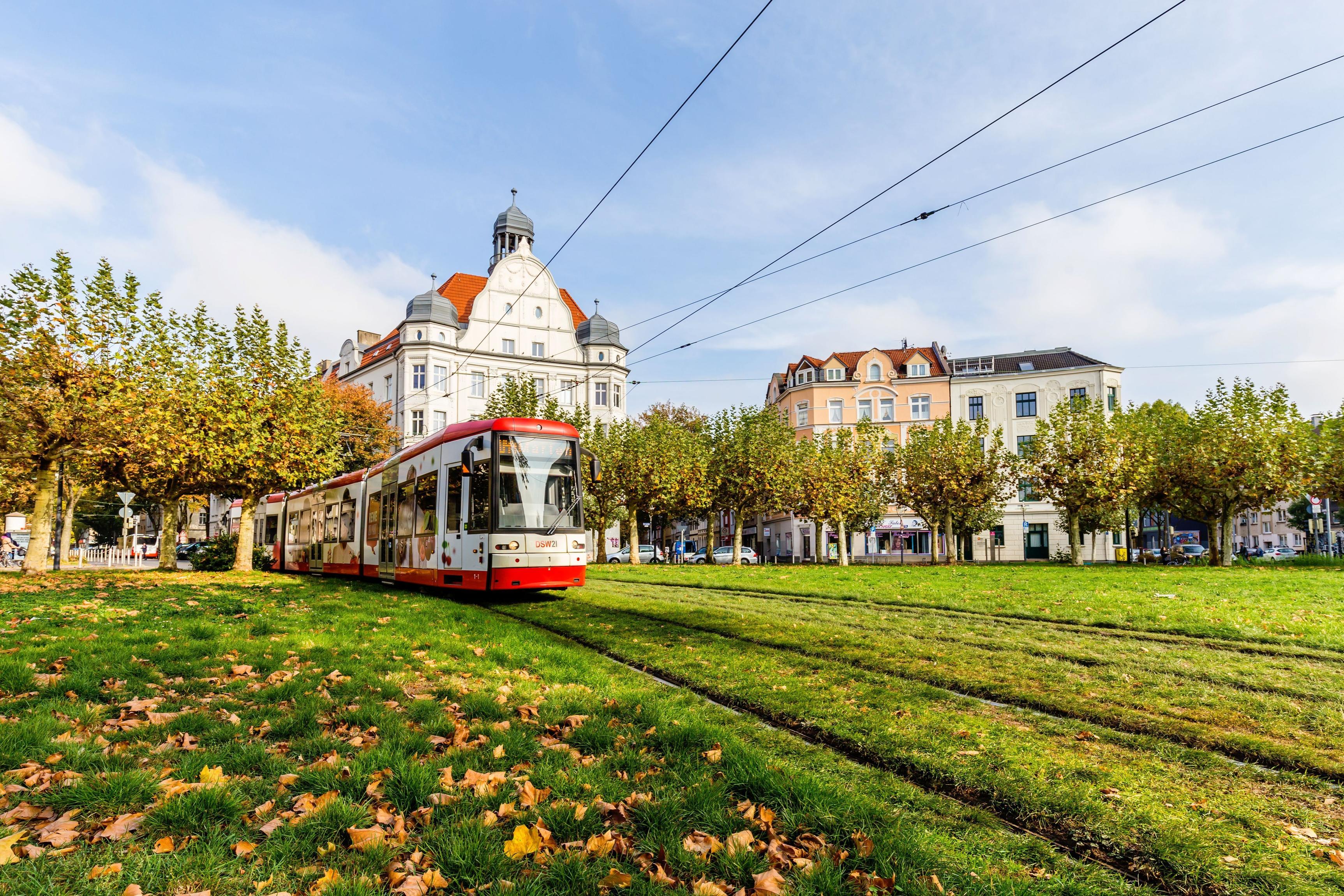
Dortmund Travel Guide
Dortmund is a dynamic metropolis in the heart of the Ruhr region that has successfully transformed from a gritty industrial powerhouse into a vibrant hub of technology, culture, and green urban living. It offers an authentic German experience, blending its medieval roots and industrial heritage with world-class football passion and expansive parklands.
About Dortmund
Founded around 882, Dortmund rose to prominence in the Middle Ages as an Imperial Free City and a key member of the Hanseatic League. By the 19th and 20th centuries, it became a titan of the industrial age, defined by its massive coal mining and steel production industries, which eventually made it a primary target during World War II, resulting in the destruction of nearly 98% of its city center. Following the war, the city underwent a remarkable period of reconstruction and, later, a structural shift away from heavy industry. Today, Dortmund serves as a model for urban transformation, where former coal mines and breweries have been repurposed into cultural landmarks, museums, and creative spaces, signaling its evolution into a modern, sustainable city.
Dortmund’s culture is deeply intertwined with its working-class roots and its status as a global football capital. The city is home to Borussia Dortmund, and the electrifying atmosphere at Signal Iduna Park is a cornerstone of local identity. The culinary scene is diverse and hearty, featuring traditional German staples like currywurst and local beers, alongside a wide array of international cuisines reflecting the city's multicultural population. Art and creativity thrive in repurposed industrial settings, most notably at the Dortmunder U, a former brewery that now serves as a center for contemporary art. The city also prides itself on being a 'green metropolis,' with nearly half of its municipal territory consisting of parks, woodlands, and waterways, providing a serene contrast to its urban energy.
Practical info
Quick facts
- Dortmund was once one of the largest beer-brewing cities in Europe, earning it a reputation for high-quality pilsner.
- The iconic Dortmunder U tower was originally built in 1927 as a fermentation and storage facility for the Union Brewery.
- Westfalenpark is home to the German Rosarium, which boasts an impressive collection of over 3,000 different rose varieties.
- Despite its industrial past, nearly 50% of the city's total area is comprised of green spaces, parks, and water.
- The city's Christmas market is one of the largest in Germany, famous for featuring one of the world's tallest Christmas trees.
Top things to do in Dortmund
The 0 attractions, museums, viewpoints, and experiences travelers visit most.
Nearby destinations
Frequently asked questions
What currency is used in Dortmund?
The currency in Dortmund, Germany is Euro (EUR).
What language is spoken in Dortmund?
German is the primary language spoken in Dortmund.
What's the weather like in Dortmund?
Temperate oceanic climate with mild, pleasant summers and cool, damp winters.
How many days do you need in Dortmund?
Most travelers spend 2–5 days in Dortmund. With 0+ attractions and 0+ noteworthy restaurants, three days hits the highlights, while five lets you dig into neighborhoods and day trips. Use the Periplo iPhone app to lay out a day-by-day plan.
What are the must-see things to do in Dortmund?
Top picks include Signal Iduna Park, Dortmunder U, Westfalenpark, German Football Museum, Zollern Colliery Industrial Museum.
Plan Dortmund in your pocket
Open the Periplo iPhone app for a day-by-day itinerary, offline maps, and live event picks tuned to your taste.
Download on the App Store